Abstract
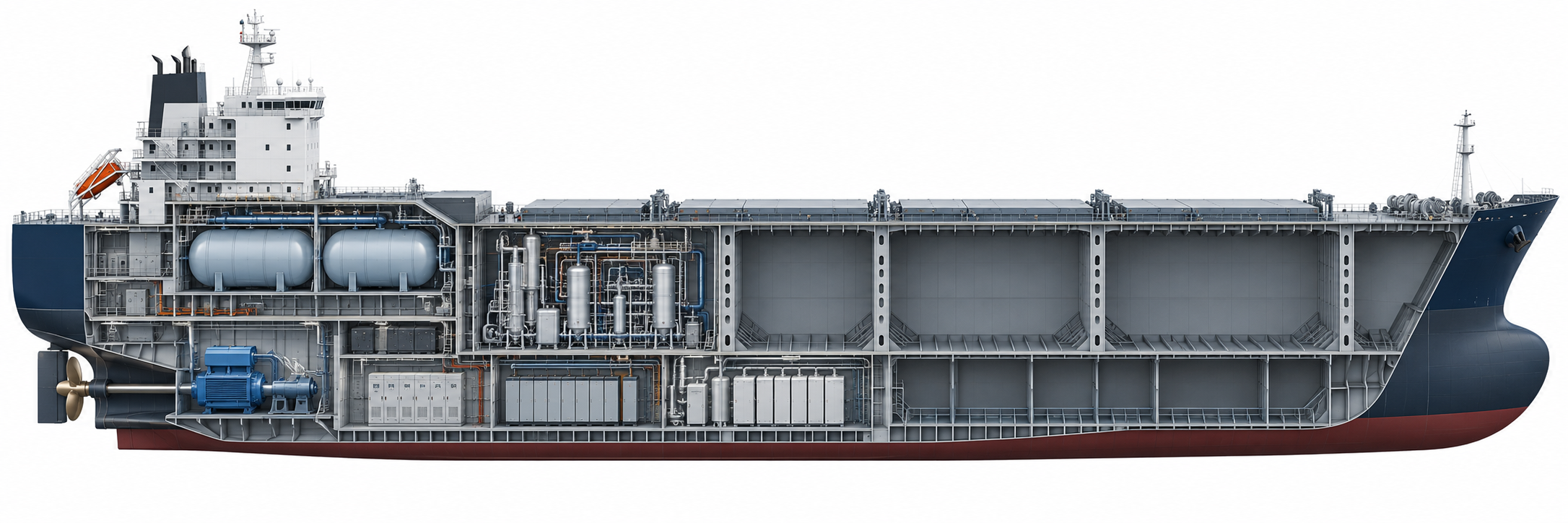
This process-design study develops a complete energy and cargo concept for a 50,000 DWT vessel carrying refrigerated ammonia and converting it onboard into hydrogen for electric propulsion. The design closes a 6,000 nmi voyage at 14 kn with a 10 MW shaft requirement and 1 MW of hotel and auxiliary loads. Rather than treating the fuel conversion as an isolated unit, the analysis links cargo inventory, ammonia cracking, hydrogen purification, PEM fuel cells, power electronics, thermal rejection, electrical distribution and operational margins in one ship-level balance.
The selected basis requires 257.1 t of hydrogen at the fuel-cell inlet. With 95% ammonia-to-hydrogen conversion, 99.5% hydrogen recovery and 52% net fuel-cell efficiency, the corresponding ammonia demand is 1,704 t. This inventory includes the calculated voyage consumption and a 15% reserve for degradation, weather and manoeuvring. Redundant cracking and purification trains are sized around the continuous load, while buffer storage decouples the variable marine power demand from the steady conversion process.
The result is a technically coherent preliminary design rather than a single equipment sketch: mass and energy balances are explicit, the propulsion chain is traceable from chemical energy to shaft power, and the principal dimensions and capacities can be carried into a later naval-architecture and safety study. The accompanying report records the assumptions, equations, sensitivity checks and limitations of the 2023 academic project.